The problem with bare LEDs
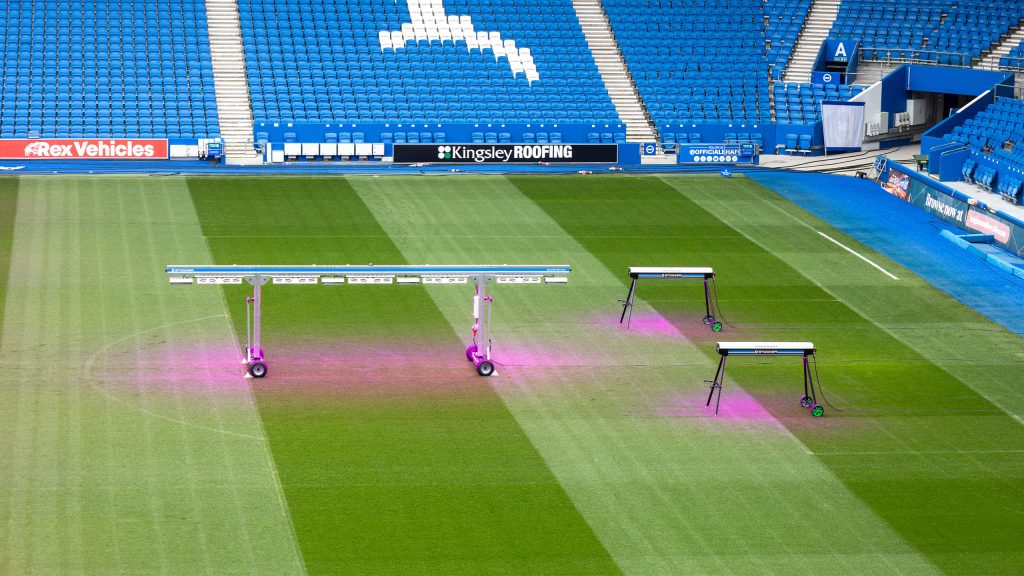
Without a lens, an LED sends its light out in a wide cone. The light is strongest right under the lamp and drops off quickly towards the sides. On the pitch, that gives bright spots and darker strips, and uneven growth as a result.
Placing many lamps close together, with overlapping beams, can smooth this out. But it needs more lamps and more frame, which makes the rig heavier and more expensive.
The solution: lenses that shape the light
Street lighting and stadium floodlights solved this problem long ago with optics. A so-called batwing lens takes the light from the LED and spreads it evenly across the full beam, instead of concentrating it in the centre. The grass at the edge of the footprint gets almost as much light as the grass under the lamp.
Why glass lenses
Stogger uses glass lenses with an anti-reflective coating. Glass lets more light through than plastic and keeps its clarity over the years. More of the light the LED produces ends up on the grass.
What this means for you
- More even growth across the whole footprint
- Fewer lamps needed for the same area, so lighter rigs
- Less wasted light outside the footprint, so less wasted energy
Check it yourself
When you compare grow lights, ask for the light level at several points across the footprint, not just one reading under the lamp. An even spread is worth more than a high peak.