The five essentials
- Light for photosynthesis
- Temperature in the leaf and the root zone
- Water in the root zone
- CO₂ from the air
- Nutrients such as nitrogen, phosphorus and potassium
Soil temperature and moisture can be managed with undersoil heating and irrigation. Light is often the hardest to control, especially in stadiums.
The stadium shade problem
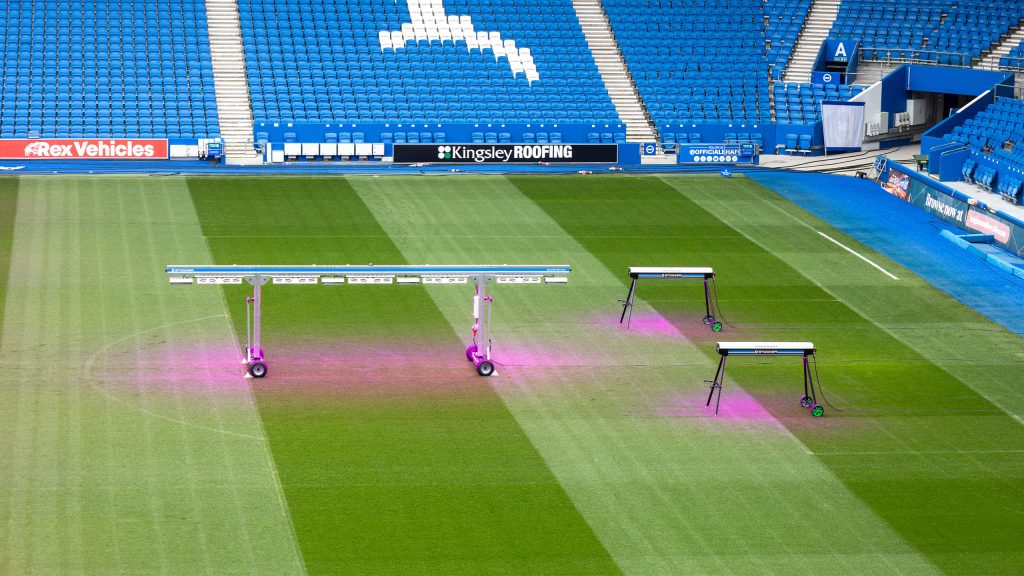
Modern stadiums have high stands and large roofs. They protect spectators, but they keep sunlight from parts of the pitch, especially in autumn and winter when the sun is low. In those areas, grass grows slower and recovers less after matches. Grow lights bring back the light that the stadium takes away.
Light simulation
A light simulation shows how much sunlight each part of the pitch receives over the season. It shows where the shade falls and where extra light is needed most. This helps you place the grow lights where they make the biggest difference.
Not too little, not too much
Too little light limits growth. Too much light costs energy without extra benefit. And in warm climates, strong direct sun combined with high temperatures can stress some grass types. The goal is the right amount of light, in the right place, at the right time.
Start with your situation
Every pitch is different. Before choosing any grow light, look at your current maintenance, feeding and data. That is the basis for a lighting plan that works for your pitch and your budget.