The right colours
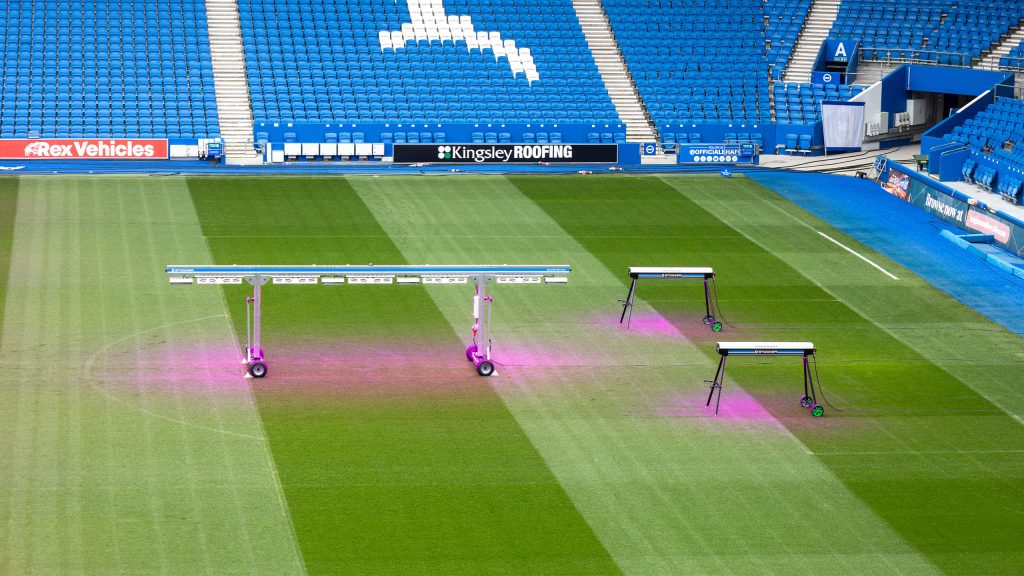
Grass does not need every colour of light equally. LEDs can be chosen to emit exactly the colours that matter most: deep blue around 450 nm, red around 660 nm and far red around 730 nm. Light in the right colour does more work per watt than a broad white spectrum. Feeding grass only the light it needs is like giving the right fertiliser instead of a bit of everything.
The best LEDs
LEDs are not all the same. Every production batch contains a small share of LEDs with the highest output and efficiency, the so-called top bin. Stogger fixtures use these top-bin LEDs, sourced through our partner MechaTronix, one of the largest buyers of Osram LEDs. More light per LED means fewer LEDs and less energy for the same result.
Driving current
The harder an LED is driven, the less efficient it becomes. A good design balances the number of LEDs and the current through them, to get the most light per watt.
Cool LEDs last longer
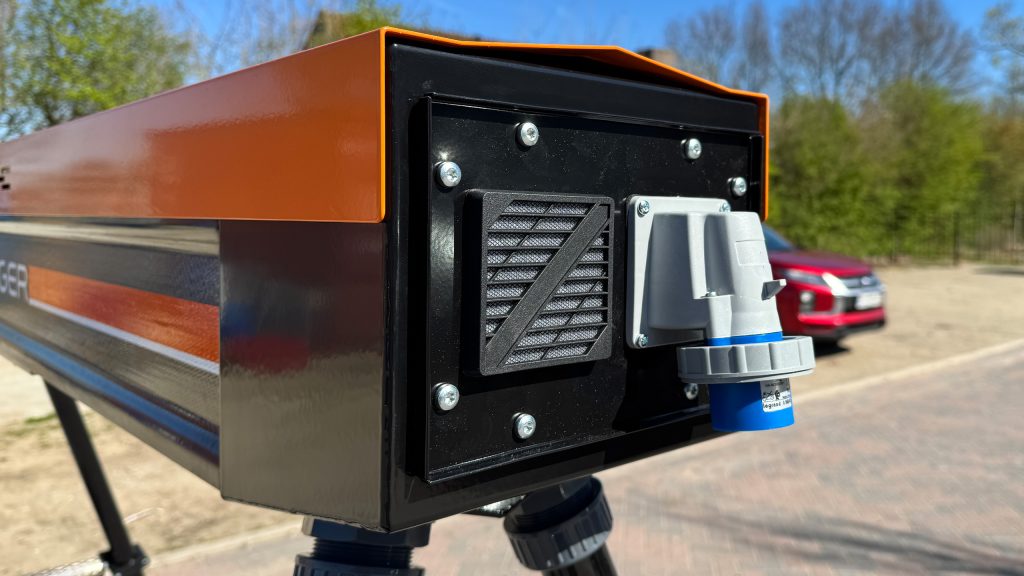
Heat is the main enemy of an LED. Many grow lights use fans for cooling. Fans can clog with dirt and fail, and the LEDs then overheat and lose output. Stogger fixtures use passive heat pipe cooling: a liquid moves the heat away from the LEDs without fans or electricity. Our LEDs run 25 to 35°C cooler than fan-cooled systems, which keeps them efficient for longer.
Light only when it is needed
The most efficient light is the light you do not have to switch on. With optional EcoLogic, a sensor on every fixture measures how much daylight reaches the grass. When there is enough, the fixture dims or switches off. When clouds come in, it switches back on. You save energy without losing growth, and you can show the savings to your club.